
How should an AI chatbot hand off to a human?
An AI chatbot should hand off to a person in three cases: the shopper asks for one, the AI doesn't know the answer, or the case needs a decision such as a refund, a cancellation or a damaged item. The handoff should carry the full conversation and the order details, so your team replies without making the shopper explain again.
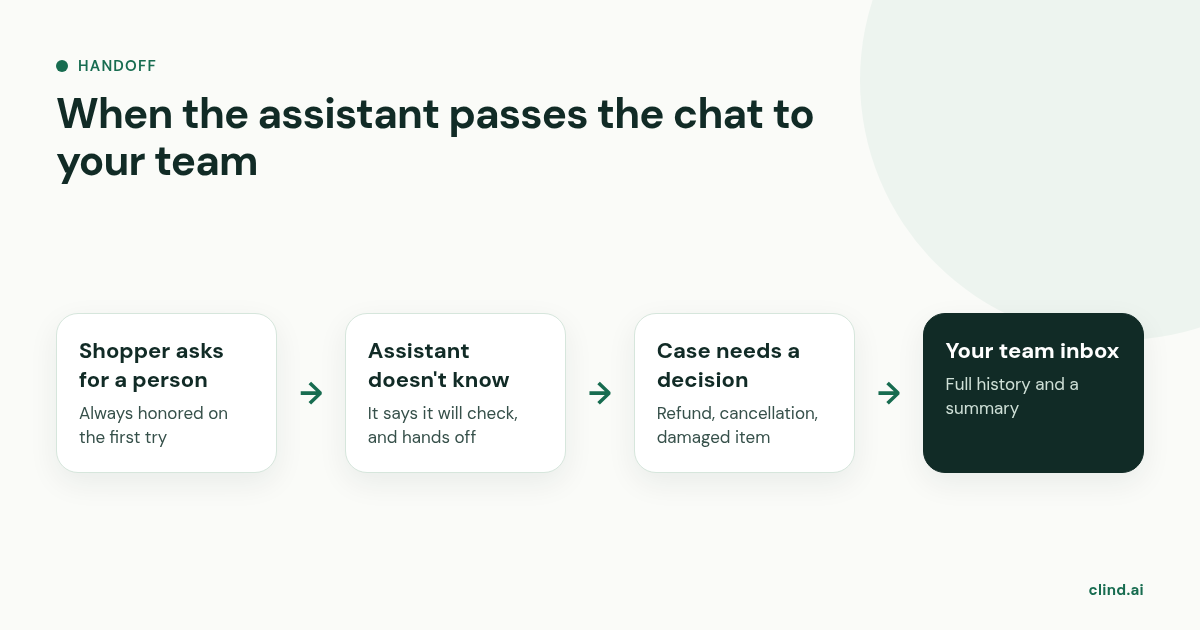
The three triggers
The shopper asks. "Can I talk to someone?" should always work, on the first try.
The AI doesn't know. If the answer isn't in your products, pages, policies or knowledge base, the assistant should say it will check with the team. A confident wrong answer about sizing or customs fees can create avoidable problems.
The case needs a decision about money, an exception or a change to an order. The assistant can collect the facts (order number, what happened, a photo if your channel supports it), but your team decides.
What a good handoff looks like
- The shopper is told what happens next: "I've passed this to the team. They will reply within [your usual reply time]." Use a time your team can actually keep.
- The conversation moves to your inbox with the full history.
- Your teammate sees the order and the reason for the handoff.
- The reply goes back on the same channel the shopper used.
Writers on escalation design, such as OpenAgent, add repeated failed attempts and strong frustration as triggers. Both are worth watching for in your own chats.
How Clind does it
Clind's assistant hands the conversation to your team when the shopper asks for a person, when it doesn't know, or when the case needs your decision. Your team sees the whole conversation and a summary in one shared inbox, on the web or in the iPhone and Android apps, and replies from there.
Related: Can an AI chatbot handle returns and refunds? and handling Shopify support alone or with a small team.
Frequently asked questions
Should the chatbot try to keep the shopper from reaching a person?
No. If a shopper asks for a person, hand off. Blocking the request can frustrate shoppers and damage trust.
What if nobody is online when the handoff happens?
Tell the shopper when to expect a reply, keep the conversation open in your inbox, and answer by the channel they used. Don't pretend someone is typing.
What should the team see after a handoff?
The whole conversation, the order if one was mentioned, and why the assistant handed off, so the first human reply moves the case forward.
When does Clind hand off?
When the shopper asks for a person, when the assistant doesn't know the answer, and in cases that need your decision, like a return, a cancellation or a damaged item.